
Isle of Palms and Sullivan’s Island Home Elevator Guide
If you’re researching a residential elevator that Isle of Palms, SC, homeowners can rely on for accessibility and convenience, it’s important to understand the unique challenges of coastal construction. Homes throughout Isle of Palms and Sullivan’s Island are often elevated due to flood zone requirements, exposed to salt air, and designed across multiple levels. These factors make elevator planning different from a typical inland installation.
Whether you’re building a new home, renovating an existing property, or planning for long-term accessibility, this guide covers what barrier island homeowners need to know about residential elevator installation, maintenance, and service.
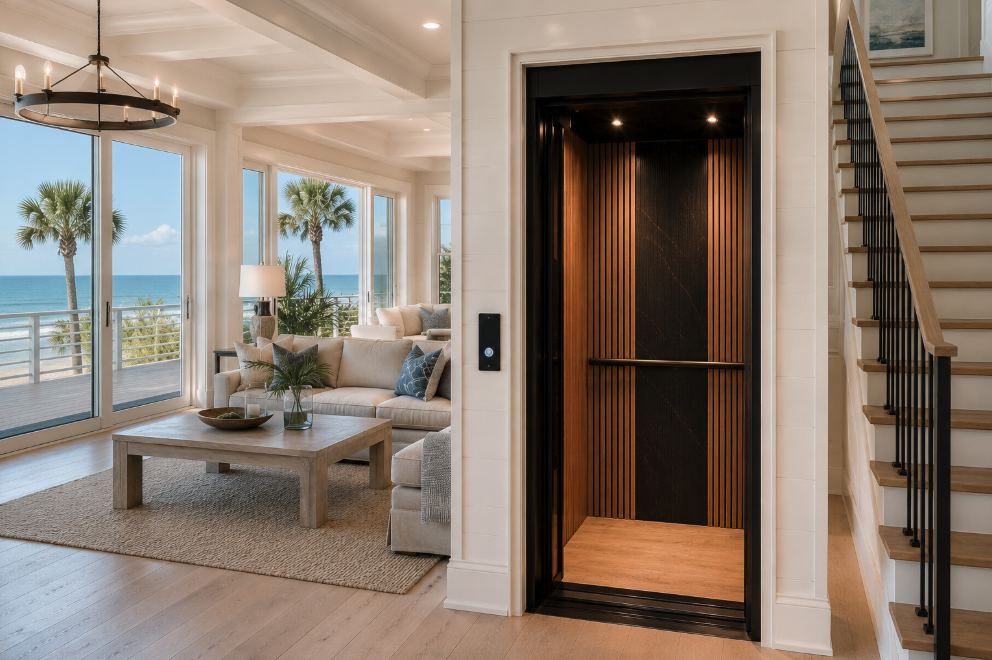
Why Isle of Palms Homeowners Choose AES For Residential Elevators
For many homeowners, a residential elevator is not simply a convenience upgrade. It’s a practical solution for navigating the unique design of coastal homes.
Most homes on Isle of Palms and Sullivan’s Island feature elevated foundations, garages beneath living spaces, and multiple upper floors. Carrying groceries, luggage, beach equipment, and everyday household items up several flights of stairs quickly becomes a challenge.
We’ve installed elevators in homes throughout Isle of Palms, Sullivan’s Island, and the greater Charleston area, from older beach cottage retrofits to new custom homes built on elevated lots. Because we understand the construction methods and environmental conditions unique to barrier island properties, we can recommend solutions specifically designed for these homes.
Homeowners also appreciate the long-term benefits. A residential elevator can make aging in place easier, improve accessibility for visiting family members, and add convenience to everyday life.
Why Residential Elevators Make Sense for Isle of Palms Homes
Installing a residential elevator in an Isle of Palms or Sullivan’s Island home requires specialized planning. Coastal properties face challenges that inland homes simply do not encounter.
Elevated and Raised Construction
Most barrier island homes are built between 8 and 14 feet above grade to comply with flood zone requirements. While some homeowners assume this makes elevator installation more difficult, elevated construction often creates excellent opportunities for multi-stop elevator configurations.
A typical island home may include a garage level, a main living floor, and one or more upper stories. A properly designed elevator can connect each level and improve access throughout the home.
Many of the same considerations apply to elevated homes throughout coastal South Carolina, particularly those located in flood-prone communities.
Salt Air and Corrosion
Salt air is one of the most important factors affecting a barrier island residential elevator.
Coastal conditions accelerate corrosion on elevator components, including guide rails, cables, hydraulic fittings, and door hardware. Without proper material selection and preventive maintenance, exposure to salt air can reduce equipment lifespan and increase service needs.
At Advantage Elevator System, we account for the barrier island environment when recommending elevator systems and maintenance schedules. Corrosion-resistant specifications and regular service help protect your investment and keep your elevator operating reliably year after year.
Seasonal and Second-Home Use
Many Isle of Palms and Sullivan’s Island homes serve as vacation properties or seasonal residences.
Unlike primary residences, where elevators are used daily, systems in second homes may sit unused for weeks or months at a time. Regular preventive maintenance helps ensure the elevator is ready when you arrive and reduces the likelihood of unexpected service issues during family visits, holidays, or peak rental seasons.
For second-home owners, reliability and peace of mind are often just as important as convenience.
Elevator Options for Island Homes
Choosing the right elevator system depends on your home’s design, available space, number of floors, and long-term goals.
Hydraulic Elevators
Hydraulic elevators remain one of the most common options for larger coastal homes. They provide smooth operation, quiet performance, and substantial lifting capacity.
Many homeowners choose hydraulic systems when they want a traditional elevator experience and a wide range of customization options. With proper coastal specifications and maintenance, hydraulic elevators perform exceptionally well in barrier island environments.
Cable-Drive Elevators
Cable-drive systems offer flexibility in both design and installation. These elevators can often be customized to complement the architectural style of the home while delivering dependable performance.
For homeowners seeking a balance of aesthetics, functionality, and efficiency, cable-drive elevators are often a strong option.
The best solution depends on your home’s unique layout and goals. During a consultation, AES evaluates your property and recommends the system best suited to your needs.
What the Installation Process Looks Like
Every residential elevator project in Isle of Palms, SC, project begins with a free in-home consultation.
During this visit, our team evaluates the home’s structure, identifies potential elevator locations, reviews accessibility goals, and discusses design preferences. We then create a customized installation plan based on the property’s layout and construction requirements.
Once the design is approved, we coordinate permitting and prepare the installation area. Most projects involve structural preparation followed by approximately three to five days of active installation work.
Many homeowners also ask about residential elevator cost during this stage. Factors such as elevator type, number of stops, customization options, and structural requirements all influence pricing. Learn more in our guide to residential elevator cost vs long-term home value.
Throughout the process, our team manages the details and keeps homeowners informed every step of the way.
Work With Island Elevator Experts
Advantage Elevator System serves Isle of Palms, Sullivan’s Island, Mount Pleasant, and the greater Charleston area. We handle permitting, coastal specifications, residential elevator installation, maintenance, and everything in between.
Whether you’re planning a retrofit project or building a new elevated home, our team can help you determine the right elevator solution for your property.
Call 843-637-4677 or schedule a free in-home consultation online.
Schedule Your Free Consultation
Frequently Asked Questions About Island Home Elevators
Can I add an elevator to my existing Isle of Palms or Sullivan’s Island home?
Yes. Most existing island homes can be retrofitted with a residential elevator. The approach depends on your home’s construction, the number of floors you want to connect, and available space. A free in-home consultation with AES will tell you exactly what’s involved in your specific home.
How does salt air affect a residential elevator on a barrier island?
Salt air accelerates corrosion on elevator components including cables, guide rails, hydraulic fittings, and door hardware. Island installations require corrosion-resistant component specifications and more frequent maintenance attention than inland homes. AES factors the barrier island environment into both installation choices and ongoing maintenance recommendations.
What type of elevator works best in a raised or elevated home?
Pneumatic (vacuum) elevators are particularly well-suited for raised homes because they require no pit below the lowest level. Hydraulic and cable-drive systems also work well in elevated construction. The right type depends on your specific home, preferred aesthetic, and budget.
How much does a residential elevator cost on Isle of Palms or Sullivan’s Island?
New residential elevator installations generally start at approximately $25,000 and vary based on elevator type, number of stops, structural requirements, and finish selections. Island properties may involve additional coastal specifications. AES provides detailed quotes following a free in-home consultation. There is no cost to the consultation.
Does AES service existing elevators on Isle of Palms and Sullivan’s Island?
Yes. AES provides maintenance and repair service throughout Isle of Palms, Sullivan’s Island, and the surrounding Lowcountry. We service all major residential elevator brands, not just systems we installed. Annual service contracts are $250 per year and include a full inspection and preventive maintenance visit.
How long does elevator installation take?
Most residential elevator installations involve 3 to 5 days of active installation work following structural preparation and permitting. Permitting timelines vary by municipality. AES manages the permitting process and keeps homeowners informed throughout.
Further Reading
Interested in learning more about accessibility planning and long-term homeownership?